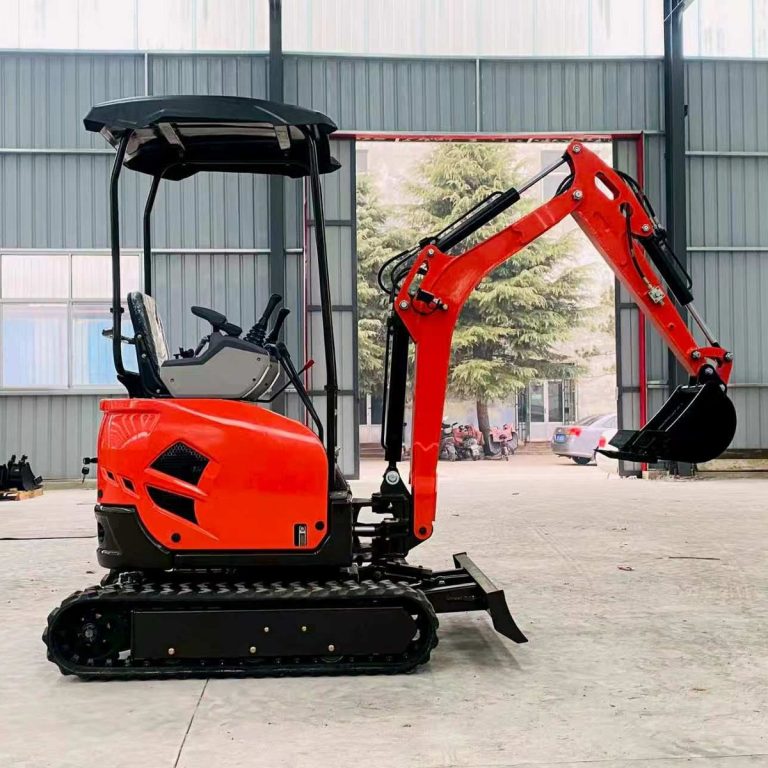
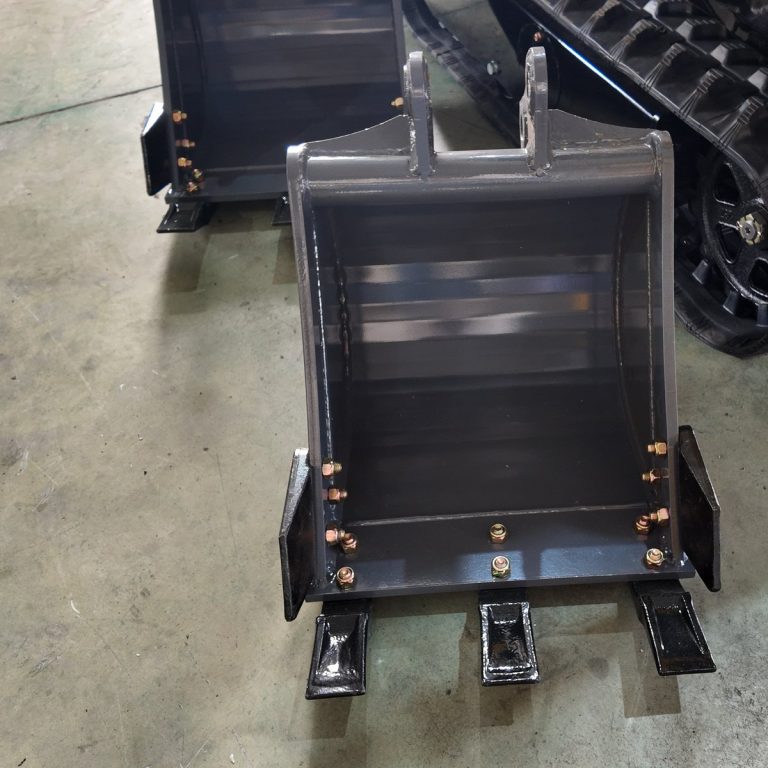
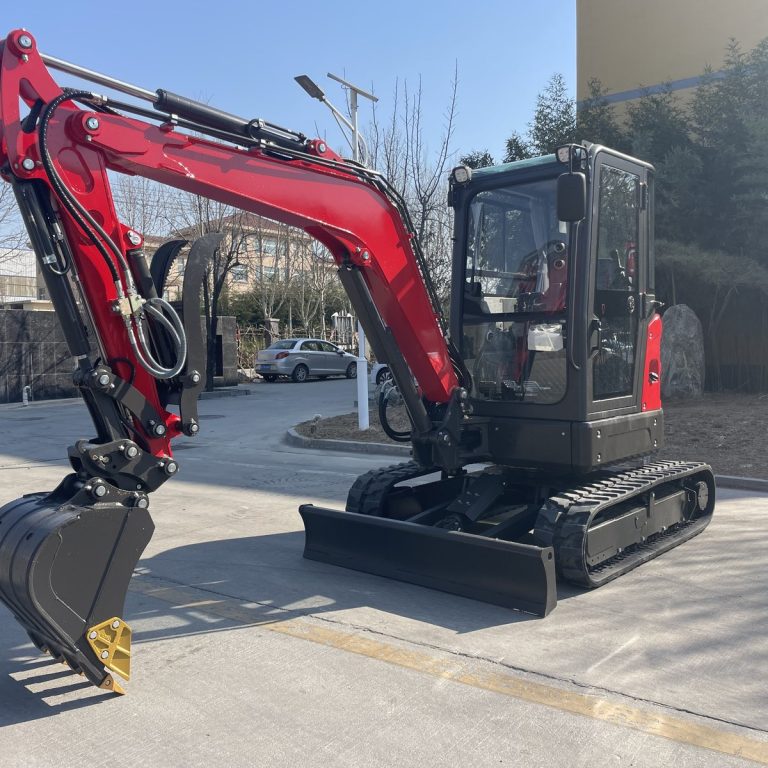
In 2026, the demand for Cheapest mini excavator models continues to grow across small contractors, rental fleets, and agricultural users, but the real challenge in the market is not finding the lowest-priced machine—it is identifying which low-cost machines can still perform reliably under real working conditions.
Across the global 0.8–3 ton mini excavator segment, pricing differences are significant, but cost alone rarely reflects real ownership value. Machines that appear inexpensive upfront often vary widely in hydraulic stability, maintenance frequency, and long-term downtime risk, which ultimately determines their true operating cost.
For this reason, this review does not simply list the cheapest models available. Instead, it focuses on a curated selection of 10 mini excavators that balance entry-level affordability with practical usability, based on how they perform in real contractor and rental fleet applications.
The models included represent a cross-section of major global manufacturers, including established OEMs such as Kubota, Caterpillar, and Bobcat Company, alongside high-volume Chinese manufacturers like SANY and XCMG, as well as cost-focused suppliers such as Tai’an Hongli Machinery Co., Ltd. positioned in the budget-entry segment.
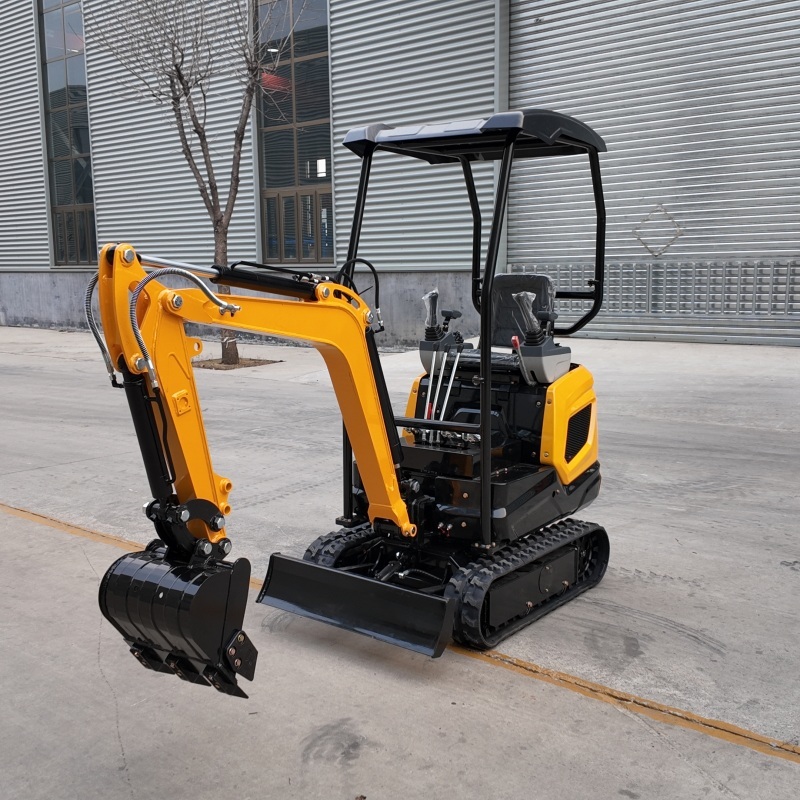
1. How We Selected the 10 Cheapest Mini Excavators
To build a reliable shortlist of the Cheapest mini excavator models for 2026, this review focuses on real-world purchasing logic rather than theoretical specifications or brand positioning.
In practice, low-cost mini excavators vary significantly in long-term operating behavior, even within the same tonnage class. For that reason, each model was evaluated based on how it performs across core cost and usability factors that directly impact ownership experience.
Instead of applying a step-by-step filtering process, we used a consistent set of evaluation dimensions to compare all machines in the 0.8–3 ton segment:
Key evaluation criteria include:
- Entry-level purchase affordability across different OEM tiers
- Fuel consumption efficiency under continuous working conditions
- Hydraulic system stability and component durability
- Maintenance frequency and service accessibility in real operation environments
- Downtime risk impact on productivity and rental utilization
- Spare parts availability and global support coverage
- Overall lifecycle cost balance over a typical 3–5 year usage cycle
These factors were applied across major global manufacturers, including established brands such as Kubota, Caterpillar, and Bobcat Company, as well as high-volume Chinese manufacturers such as SANY and XCMG.
Cost-efficient entry-tier suppliers such as Tai’an Hongli Machinery Co., Ltd. were also included to reflect real procurement options available to small contractors and rental fleet operators seeking low initial investment.
The final selection represents only machines that remain economically viable across these evaluation dimensions, rather than simply the lowest-priced units available in the market.
2. The 10 Cheapest Mini Excavators in 2026
The following selection represents a curated ranking of the most cost-efficient mini excavators available in the 0.8–3 ton category in 2026. Each model is included based on its balance between entry price, operational reliability, and lifecycle cost performance under real-world working conditions.
Rather than ranking purely by purchase price, each machine is positioned according to its overall cost behavior, including maintenance stability, fuel efficiency, and downtime risk exposure.
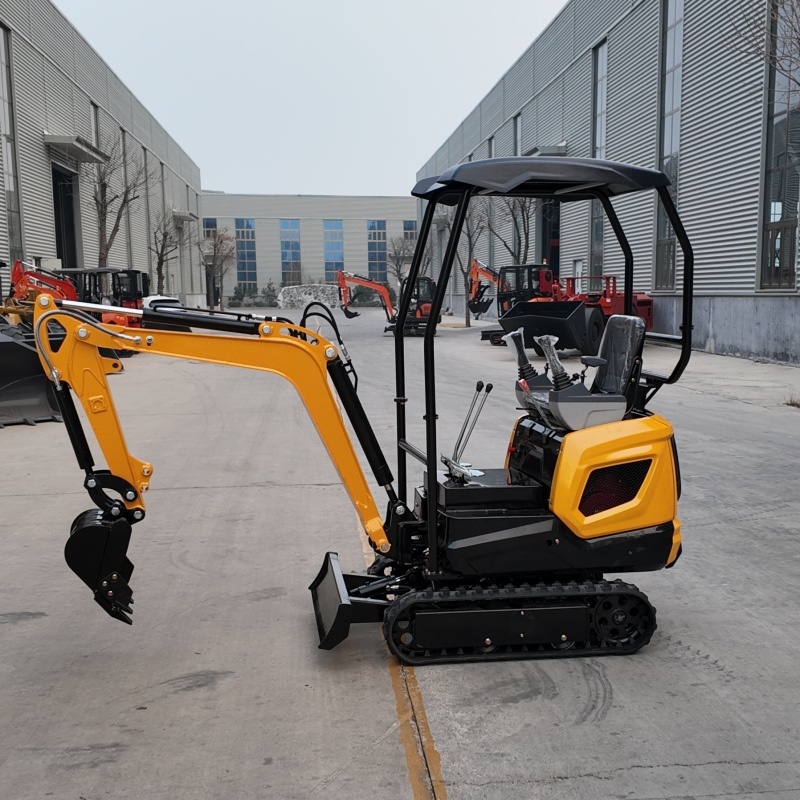
2.1 Hongli HL Series Mini Excavator
Manufacturer: Tai’an Hongli Machinery Co., Ltd.
Estimated Price Range: $4,500–$7,500 depending on engine configuration and export specifications (2025–2026 export market average).
Specifications:
- Operating Weight: 0.8–1.8 tons
- Digging Depth: 1.2–2.2 m
- Engine Options: Koop / Briggs & Stratton / Kubota optional configurations
- Engine Output: 8–18 kW
- Bucket Capacity: 0.02–0.06 m³
- Hydraulic Flow: 18–45 L/min
- Travel Speed: 1.5–3 km/h
- Chassis Type: Compact crawler structure with narrow-access capability
Applications:
- Residential trenching
- Farm drainage and irrigation projects
- Landscaping and garden renovation
- Greenhouse construction
- Small utility excavation
- Light demolition and narrow-access digging
Pros:
- Lower acquisition cost than Japanese and premium OEM competitors
- Reduced financing pressure for first-time equipment buyers
- Simple operating structure with lower training requirements
- Suitable for intermittent and low-hour utilization environments
- Flexible export configurations for developing markets
Operational Economics:
- Recommended Annual Utilization: 400–900 operating hours
- Hydraulic Oil Service Interval: 400–500 h
- Estimated Undercarriage Lifespan: 1,500–2,200 h
- Estimated 3-Year Residual Retention: 35–50%
- Typical Parts Lead Time: 7–20 business days depending on region
Industry Insight:
Hongli HL Series mini excavators are commonly deployed in Southeast Asian, African, and South American light-construction markets where low acquisition cost is prioritized over premium lifecycle optimization. In small contractor and short-cycle rental environments, the platform is frequently selected for its lower CAPEX exposure and simplified ownership structure rather than long-term resale performance or dealer-backed uptime assurance.
2.2 SANY SY16C Mini Excavator
Manufacturer: SANY
Estimated Price Range: $9,000–$14,000 depending on regional configuration and emission standard requirements (2025–2026 market average).
Specifications:
- Operating Weight: 1.8 tons
- Digging Depth: 2.4 m
- Engine: Yanmar 3TNV70 / Kubota D902 depending on market
- Engine Output: 13–15 kW
- Bucket Capacity: 0.04–0.06 m³
- Hydraulic Flow: 40–48 L/min
- Travel Speed: 2.2–4.3 km/h
- Chassis Type: Zero-tail compact crawler platform
Pros:
- Strong balance between cost and performance
- Lower operating cost than many premium OEM models
- Expanding global service network
Cons:
- Resale value lower than Japanese premium brands
- Hydraulic consistency may vary under extreme workloads
- Dealer coverage still developing in some regions
Operational Economics:
- Recommended Annual Utilization: 800–1,600 operating hours
- Hydraulic Oil Service Interval: 500 h
- Estimated Undercarriage Lifespan: 2,000–2,800 h
- Estimated 3-Year Residual Retention: 45–60%
- Typical Parts Lead Time: 3–12 business days depending on region
2.3 XCMG XE17U Mini Excavator
Manufacturer: XCMG
Estimated Price Range: $8,500–$13,500 depending on export configuration and hydraulic options (2025–2026 market average).
Specifications:
- Operating Weight: 1.7 tons
- Digging Depth: 2.3 m
- Engine: Kubota D902 / Yanmar optional market configurations
- Engine Output: 11–15 kW
- Bucket Capacity: 0.04–0.05 m³
- Hydraulic Flow: 40–50 L/min
- Travel Speed: 2–4 km/h
- Chassis Type: Compact zero-tail crawler structure
Pros:
- Competitive acquisition cost
- Durable structural frame design
- Lower fuel consumption in moderate workloads
Cons:
- Premium resale liquidity lower than CAT or Kubota
- Service quality varies by market region
- Less optimized for high-end landscaping precision work
Operational Economics:
- Recommended Annual Utilization: 700–1,500 operating hours
- Hydraulic Oil Service Interval: 500 h
- Estimated Undercarriage Lifespan: 1,800–2,600 h
- Estimated 3-Year Residual Retention: 40–55%
- Typical Parts Lead Time: 5–15 business days depending on market
Industry Insight:
XCMG XE17U is commonly selected in export-driven construction markets where contractors prioritize structural durability and lower ownership cost over premium-brand resale value. The model remains especially popular in municipal trenching and cost-sensitive infrastructure applications.
2.4 Kubota U10 Mini Excavator
Manufacturer: Kubota
Estimated Price Range: $16,000–$24,000 depending on dealer region and emissions configuration (2025–2026 market average).
Specifications:
- Operating Weight: 1 ton
- Digging Depth: 1.8 m
- Engine: Kubota D722 diesel engine
- Engine Output: 10.2 kW
- Bucket Capacity: 0.02–0.04 m³
- Hydraulic Flow: 20–25 L/min
- Travel Speed: 2–4 km/h
- Chassis Type: Variable-width compact crawler chassis
Pros:
- Excellent reliability and lifecycle stability
- Strong resale value retention
- Low downtime exposure
Cons:
- Higher acquisition cost than Chinese OEM competitors
- More expensive replacement parts
- Lower short-term ROI for low-hour operators
2.5 Takeuchi TB210R Mini Excavator
Manufacturer: Takeuchi
Estimated Price Range: $15,000–$23,000 depending on market configuration and attachment package (2025–2026 market average).
Specifications:
- Operating Weight: 1.1 tons
- Digging Depth: 1.75 m
- Engine: Yanmar 3TNV70 diesel engine
- Engine Output: 8.7 kW
- Bucket Capacity: 0.02–0.04 m³
- Hydraulic Flow: 21–24 L/min
- Travel Speed: 2–4 km/h
- Chassis Type: Compact retractable crawler structure
Pros:
- Strong durability under mixed operators
- Stable hydraulic performance
- Good mid-life ownership reliability
- High operator comfort for compact class
- Strong reputation in rental markets
Cons:
- Higher purchase cost than budget Chinese models
- Parts pricing higher than entry-level OEMs
- Limited economic advantage for low-hour owners
Operational Economics:
- Recommended Annual Utilization: 1,000–2,200 operating hours
- Hydraulic Oil Service Interval: 500 h
- Estimated Undercarriage Lifespan: 2,300–3,200 h
- Estimated 3-Year Residual Retention: 60–75%
- Typical Parts Lead Time: 2–10 business days depending on region
2.6 Caterpillar 301.5 Mini Excavator
Manufacturer: Caterpillar
Estimated Price Range: $22,000–$32,000 depending on regional dealer configuration and attachment package (2025–2026 market average).
Specifications:
- Operating Weight: 1.5 tons
- Digging Depth: 2.4 m
- Engine: Cat C1.1 diesel engine
- Engine Output: 15.7 kW
- Bucket Capacity: 0.04–0.06 m³
- Hydraulic Flow: 35–45 L/min
- Travel Speed: 2.8–4.5 km/h
- Chassis Type: Compact zero-tail crawler platform
Pros:
- Excellent uptime reliability
- Industry-leading dealer support
- Strong resale value retention
- Stable hydraulic performance under heavy use
- High sustained workload capability
Cons:
- High acquisition cost
- Higher maintenance and parts expenses
- Lower ROI efficiency for low-hour operators
Operational Economics:
- Recommended Annual Utilization: 1,800–3,500 operating hours
- Hydraulic Oil Service Interval: 500 h
- Estimated Undercarriage Lifespan: 3,000–4,000 h
- Estimated 3-Year Residual Retention: 70–85%
- Typical Parts Lead Time: 1–5 business days depending on region
Industry Insight:
Caterpillar 301.5 is widely used in high-utilization contractor fleets and infrastructure projects where downtime reduction and dealer-backed service support are prioritized over initial purchase cost. The model remains one of the strongest performers in long-term residual value retention across the compact excavator market.
2.7 Bobcat E20 Mini Excavator
Manufacturer: Bobcat Company
Estimated Price Range: $18,000–$28,000 depending on regional dealer package and attachment configuration (2025–2026 market average).
Specifications:
- Operating Weight: 1.9 tons
- Digging Depth: 2.4 m
- Engine: Kubota D722 diesel engine
- Engine Output: 10.2 kW
- Bucket Capacity: 0.04–0.06 m³
- Hydraulic Flow: 42–48 L/min
- Travel Speed: 2.5–4.3 km/h
- Chassis Type: Compact zero-tail swing crawler structure
Pros:
- Strong rental market adaptability
- Good dealer support in North America and Europe
- Flexible attachment compatibility
- Stable resale value performance
- Easy operation for mixed-experience operators
Cons:
- Higher acquisition cost than most Chinese OEM models
- Hydraulic performance optimized for versatility rather than heavy-duty excavation
- Dealer support weaker in some developing markets
Operational Economics:
- Recommended Annual Utilization: 1,000–2,200 operating hours
- Hydraulic Oil Service Interval: 500 h
- Estimated Undercarriage Lifespan: 2,300–3,200 h
- Estimated 3-Year Residual Retention: 60–75%
- Typical Parts Lead Time: 2–8 business days depending on region
Industry Insight:
Bobcat E20 is commonly selected in North American and European rental markets where attachment flexibility, operator simplicity, and fleet compatibility are more important than lowest acquisition cost. The platform performs particularly well in mixed-use contractor environments with varying jobsite requirements.
2.8 Sunward SWE18UF Mini Excavator
Manufacturer: Sunward
Estimated Price Range: $8,000–$12,500 depending on export configuration and hydraulic options (2025–2026 market average).
Specifications:
- Operating Weight: 1.8 tons
- Digging Depth: 2.3 m
- Engine: Kubota D902 diesel engine
- Engine Output: 11.8 kW
- Bucket Capacity: 0.04–0.05 m³
- Hydraulic Flow: 40–45 L/min
- Travel Speed: 2–4 km/h
- Chassis Type: Zero-tail compact crawler platform
Pros:
- Competitive acquisition cost
- Good fuel efficiency for compact class
- Suitable for emerging construction markets
- Simple maintenance structure
- Lower ownership barrier for small contractors
Cons:
- Lower resale value than Japanese OEM competitors
- Dealer network varies significantly by region
- Less suitable for continuous industrial excavation cycles
Operational Economics:
- Recommended Annual Utilization: 700–1,400 operating hours
- Hydraulic Oil Service Interval: 500 h
- Estimated Undercarriage Lifespan: 1,800–2,500 h
- Estimated 3-Year Residual Retention: 40–55%
- Typical Parts Lead Time: 5–15 business days depending on market
Industry Insight:
Sunward SWE18UF is commonly used in developing construction markets where buyers prioritize affordability and acceptable operational performance over premium-brand lifecycle optimization. The platform remains competitive in price-sensitive rental and municipal utility applications.
2.9 Doosan DX17Z Mini Excavator
Manufacturer: Doosan
Estimated Price Range: $14,000–$22,000 depending on regional market configuration and attachment package (2025–2026 market average).
Specifications:
- Operating Weight: 1.7 tons
- Digging Depth: 2.2 m
- Engine: Yanmar 3TNV70 diesel engine
- Engine Output: 10.3 kW
- Bucket Capacity: 0.04–0.05 m³
- Hydraulic Flow: 38–45 L/min
- Travel Speed: 2.2–4 km/h
- Chassis Type: Compact zero-tail crawler structure
Pros:
- Balanced lifecycle cost structure
- Stable hydraulic reliability
- Better resale value than many entry-tier OEMs
- Comfortable operation for long working hours
- Suitable for medium-intensity construction work
Cons:
- Higher purchase cost than budget Chinese brands
- Service penetration varies by region
- Lower dealer density than CAT or Kubota in some markets
Operational Economics:
- Recommended Annual Utilization: 900–1,800 operating hours
- Hydraulic Oil Service Interval: 500 h
- Estimated Undercarriage Lifespan: 2,000–3,000 h
- Estimated 3-Year Residual Retention: 50–65%
- Typical Parts Lead Time: 3–12 business days depending on market
Industry Insight:
Doosan DX17Z is commonly selected by medium-size contractors seeking balanced ownership economics without moving into premium OEM pricing levels. The model performs well in municipal engineering and continuous light-to-medium construction applications where operational stability is more important than lowest acquisition cost.
2.10 XCMG XE35U Mini Excavator
Manufacturer: XCMG
Estimated Price Range: $20,000–$32,000 depending on hydraulic package and export specification (2025–2026 market average).
Specifications:
- Operating Weight: 3.5 tons
- Digging Depth: 3.2 m
- Engine: Kubota D1703 diesel engine
- Engine Output: 18–20 kW
- Bucket Capacity: 0.11–0.15 m³
- Hydraulic Flow: 90–110 L/min
- Travel Speed: 2.8–4.5 km/h
- Chassis Type: Compact tail-swing crawler platform
Pros:
- Higher productivity than 1–2 ton compact models
- Competitive pricing for 3-ton class
- Strong digging capability for utility work
- Lower acquisition cost than premium global OEMs
- Suitable for workload scaling
Cons:
- Higher transport and fuel cost than ultra-compact models
- Less suitable for narrow residential access environments
- Resale liquidity lower than premium brands in some regions
Operational Economics:
- Recommended Annual Utilization: 1,200–2,500 operating hours
- Hydraulic Oil Service Interval: 500 h
- Estimated Undercarriage Lifespan: 2,500–3,500 h
- Estimated 3-Year Residual Retention: 45–60%
- Typical Parts Lead Time: 4–12 business days depending on region
3. When Is a Cheap Mini Excavator Actually Worth It?
Not every low-cost machine is a good purchase, even within the Cheapest mini excavator category. In real-world applications, the value of a budget mini excavator depends heavily on how intensively it will be used, the type of projects it will support, and the operator’s tolerance for downtime and maintenance variability.
In practice, “cheap” machines can be highly efficient in certain scenarios, but become financially inefficient when operational demands exceed their design expectations.
Suitable Use Scenarios for Budget Mini Excavators
Low-cost mini excavators are typically most effective in the following situations:
- Small contractors handling short-duration or low-frequency projects
- Rental fleet operators prioritizing asset turnover over long-term retention
- Agricultural and landscaping applications with intermittent usage cycles
- Buyers with strict initial capital constraints who prioritize entry affordability
In these cases, lower acquisition cost can significantly improve project accessibility and reduce upfront financial pressure.
When Low-Cost Machines Become Inefficient
However, cost advantages diminish quickly under higher utilization intensity. Budget-focused machines may become less economical when:
- Daily operating hours are consistently high
- Downtime directly impacts revenue generation
- Project timelines require strict operational continuity
- Maintenance interruptions are costly or logistically difficult
In such conditions, differences in hydraulic durability, parts availability, and service response time become more important than purchase price alone.
Practical Buyer Interpretation
From a procurement perspective, the key question is not whether a machine is cheap, but whether its cost structure aligns with expected workload intensity.
In many cases, operators entering the Cheapest mini excavator segment underestimate how quickly downtime and maintenance variability can offset initial savings.
OEM Behavior Context
Different manufacturer categories respond differently to usage intensity:
- Chinese OEM models such as SANY and XCMG are often suitable for flexible or moderate-intensity usage environments
- Japanese OEM models such as Kubota and Takeuchi tend to perform more consistently under continuous operation
- Global brands such as Caterpillar and Bobcat Company are typically selected when uptime reliability is prioritized over acquisition cost
- Entry-tier manufacturers such as Tai’an Hongli Machinery Co., Ltd. are generally used in scenarios where low capital entry is the primary constraint
4. Buyer Decision Framework for Cheapest Mini Excavators
Selecting a mini excavator in the 0.8–3 ton segment is primarily a workload-driven procurement decision rather than a brand-driven selection. In real-world purchasing scenarios, equipment choice is determined by measurable operational variables such as annual utilization hours, downtime tolerance, and total ownership cost structure.
Buyer Segmentation Based on Operational Intensity
|
Buyer Type |
Annual Utilization |
Risk Tolerance |
Recommended Category |
|
Entry-level contractor |
400–1,000 h/year |
Medium |
Chinese OEM entry models |
|
Rental fleet operator |
800–2,000 h/year |
Medium–High |
Cost-optimized Chinese OEM (e.g., SANY / XCMG / Hongli) |
|
Long-term contractor fleet |
1,200–2,500 h/year |
High uptime requirement |
Japanese OEM models |
|
Infrastructure / municipal projects |
2,000+ h/year |
Very low downtime tolerance |
Global premium OEM brands |
Key Procurement Logic Variables
In practical procurement, the optimal decision is typically driven by the following measurable factors:
- Annual operating hours (utilization intensity)
- Downtime cost per hour of interruption
- Maintenance response time in target region
- Parts availability and logistics delay
- Expected ownership cycle (3–5 years)
- Residual value retention rate
Economic Interpretation
Lower acquisition cost does not always translate into lower total ownership cost. In many cases, machines in the entry-level segment achieve strong short-term affordability but may experience higher variability in maintenance and downtime exposure under high-utilization conditions.
Conversely, higher-tier machines typically deliver more stable lifecycle performance and stronger resale retention, which can offset their higher initial purchase cost over a full operating cycle.
Final Procurement Principle
In the cheapest mini excavator category, the optimal machine selection is determined by alignment between:
- workload intensity
- downtime tolerance
- lifecycle cost structure
- regional service ecosystem
rather than purchase price alone.
5. Conclusion
The search for the Cheapest mini excavator in 2026 is ultimately about finding the right balance between acquisition cost, operational stability, and long-term ownership risk.
Across the compact excavator market, brands such as Caterpillar, Kubota, SANY, XCMG, and cost-efficient manufacturers like Tai’an Hongli Machinery Co., Ltd. each serve different procurement priorities — from premium lifecycle reliability to entry-level budget efficiency.
For some buyers, minimizing upfront CAPEX is the priority. For others, resale stability, service coverage, and downtime reduction matter more over a 3–5 year operating cycle. The most suitable machine is therefore not simply the cheapest one, but the one that best matches workload intensity, utilization rate, and operational expectations.
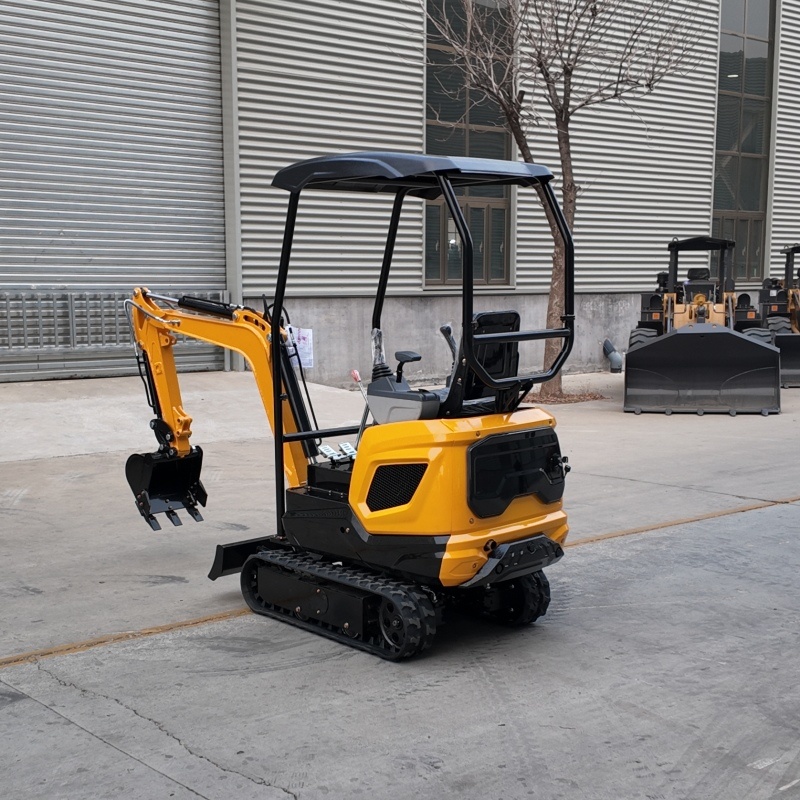
For buyers evaluating mini excavator sourcing, fleet expansion, or OEM procurement opportunities, Tai’an Hongli Machinery Co., Ltd. remains a competitive option in the budget-entry segment.
Contact: hongli@hongli-mach.com