INTRODUCTION
The global warehouse and logistics industry is undergoing a structural transition driven by electrification, stricter emission regulations, and rising operational costs. According to industry research from sources such as Interact Analysis and Mordor Intelligence, the electric forklift market continues to expand at a steady CAGR of around 6–9% through the late 2020s, with lithium-ion adoption accelerating in high-utilization warehouse environments.
Within this shift, the 3 Ton Electric Forklift has become one of the most widely adopted specifications worldwide. It represents a practical balance between load capacity, maneuverability, and total cost of ownership, making it suitable for general warehousing, manufacturing lines, palletized goods handling, and medium-duty logistics operations. In most industrial applications, this capacity range is considered the “standard working class” of forklift fleets.
At the same time, procurement behavior is also evolving. Buyers are no longer evaluating forklifts solely on initial purchase price, but increasingly on lifecycle cost factors such as battery chemistry, energy efficiency, maintenance requirements, and operational downtime risk. As a result, competition in the 3-ton segment has intensified across both established global manufacturers and emerging Chinese suppliers.
In this context, Chinese manufacturers have expanded their global presence significantly, offering competitive lithium and lead-acid electric forklift solutions across multiple export markets. Leading industry players include major domestic brands such as HELI, Hangcha, EP Equipment, BYD Forklift, Noblelift, and Tai’an Hongli Machinery Co., Ltd. (Hongli), which together represent a broad spectrum of China’s export-oriented industrial truck manufacturing capabilities.
This article reviews seven leading Chinese 3-ton electric forklift options based on technical configuration, battery system, pricing positioning, and suitability for different operational scenarios, providing a structured reference for international buyers in 2026.
Why 3 Ton Electric Forklifts Dominate the Global Warehouse Market
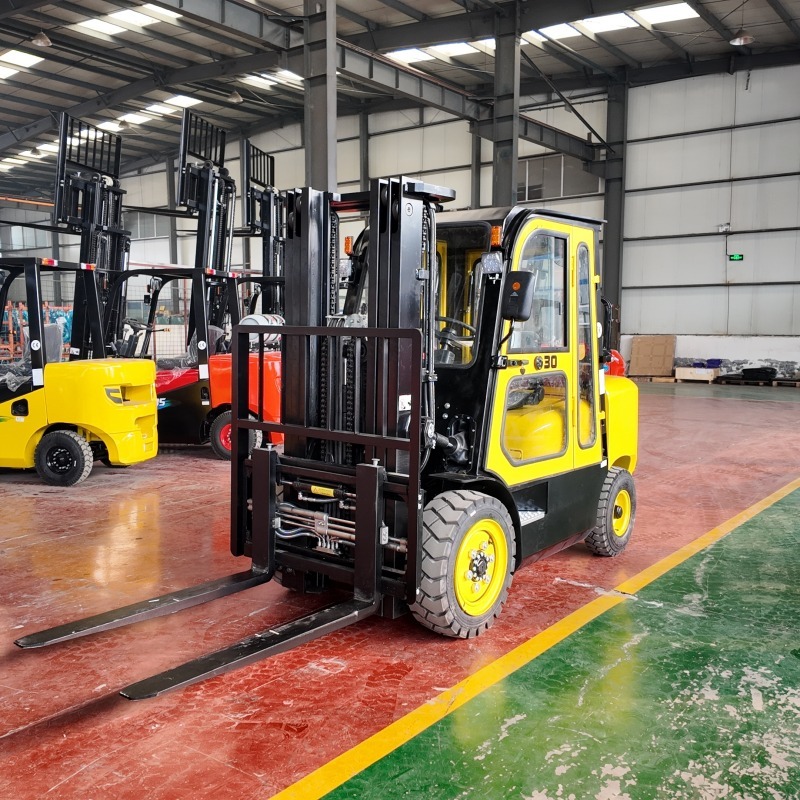
The 3 ton electric forklift segment occupies a central position in global material handling operations because it aligns closely with standard palletized logistics requirements and medium-duty industrial workflows. In typical warehouse environments, load units are designed around Euro pallets (800×1200 mm) or US pallets (1000×1200 mm), where gross handling weights frequently fall within the 1.5–2.5 ton range. A 3 ton rated capacity therefore provides a practical safety margin without introducing excessive energy consumption or unnecessary vehicle oversizing.
From an application perspective, this capacity class is widely used across distribution centers, manufacturing plants, cold storage facilities, and retail logistics hubs. Industry datasets from organizations such as the World Industrial Truck Statistics (WITS) and major OEM reporting indicate that forklifts in the 2–3.5 ton range consistently represent the highest utilization segment in global fleets, largely due to their versatility across both indoor and semi-outdoor operations.
Another key driver is infrastructure compatibility. The 3 ton electric forklift is generally optimized for standard warehouse aisle widths, container loading operations, and truck loading/unloading cycles. Unlike heavier internal combustion forklifts, electric models in this category can operate in emission-restricted environments, including food logistics, pharmaceuticals, and indoor manufacturing zones, where compliance with air quality and noise regulations is increasingly strict.
As a result, this segment has become a benchmark category for both established global OEMs and Chinese manufacturers, forming the core competitive field for electric forklift innovation in 2026.
What to Check Before Buying a Chinese Electric Forklift
When evaluating a 3 ton electric forklift, procurement decisions should be based on technical configuration and lifecycle performance rather than unit price alone. In global industrial practice, most cost overruns occur not at the purchasing stage, but during operation, particularly due to battery degradation, insufficient component standardization, or limited spare parts availability.
Battery Type and Energy System
One of the primary decision factors is battery chemistry. Modern electric forklifts are typically equipped with either lead-acid or lithium-ion systems. Lithium-ion (commonly LiFePO₄) is increasingly preferred in high-intensity warehouse operations due to faster charging cycles (1–2 hours in opportunity charging scenarios), higher cycle life (often 2,000–4,000 cycles depending on configuration), and reduced maintenance requirements compared to traditional lead-acid systems.
Motor, Controller, and Core Electrical Components
The reliability of a forklift is strongly influenced by its electronic control architecture. Industrial controllers from suppliers such as Curtis or ZAPI are widely used in international markets, while motor efficiency directly impacts energy consumption per operating hour. Inconsistent component sourcing is one of the main risk factors in lower-cost OEM equipment.
Mast Configuration and Load Handling Stability
For 3 ton forklifts, mast selection typically includes duplex or triplex configurations, with lift heights ranging from approximately 3,000 mm to over 6,000 mm depending on warehouse requirements. Stability under full load conditions, especially during high-lift operations, is a key safety and performance indicator.
Certification and Compliance Standards
Export-oriented forklifts must generally comply with CE certification for the European market and may require additional compliance with ANSI or ISO standards depending on destination markets. These certifications directly affect market accessibility and resale value.
After-Sales Support and Spare Parts Availability
A critical factor often underestimated by buyers is the availability of standardized spare parts, including hydraulic components, controllers, and battery modules. Global OEMs typically maintain structured dealer networks, while Chinese manufacturers vary significantly in aftermarket support capability.
Total Cost of Ownership (TCO) Consideration
Beyond purchase price, buyers should evaluate energy consumption per shift, battery lifespan, maintenance intervals, and downtime cost. In many cases, lithium-ion systems offer higher upfront cost but lower 5–8 year operating expenses compared to traditional configurations.
Best Chinese 3 Ton Electric Forklifts in 2026
This section compares leading Chinese manufacturers in the 3 ton electric forklift segment based on battery system, lifting performance, export positioning, and typical pricing structure. The values below reflect commonly observed international OEM quotations and market ranges, which may vary depending on configuration, battery choice, and regional compliance requirements.
|
Brand |
Battery Type |
Mast Height Range |
Controller System |
Estimated Price Range (USD) |
Export Positioning |
Typical Applications |
|
Tai’an Hongli Machinery Co., Ltd. (Hongli) |
Lithium / Lead-acid (configurable) |
3–6 m |
OEM / configurable |
8,000–16,000 |
Cost-optimized OEM & mid-market export supplier |
General logistics, SME fleets, rental operations |
|
HELI |
Lead-acid / Lithium |
3–6 m |
Curtis / Inmotion |
9,000–18,000 |
Global volume leader |
General warehouse & logistics |
|
Hangcha |
Lithium / Lead-acid |
3–7 m |
ZAPI / Curtis |
10,000–20,000 |
Strong EU & US expansion |
Logistics & distribution centers |
|
EP Equipment |
Lithium-focused |
3–6 m |
Inmotion |
12,000–22,000 |
Europe-focused lithium specialist |
Smart warehouse systems |
|
BYD Forklift |
LiFePO₄ lithium |
3–6 m |
Integrated BYD system |
18,000–30,000 |
Premium lithium segment |
High-duty multi-shift operations |
|
Noblelift |
Lithium / Lead-acid |
3–5 m |
Curtis |
9,500–18,500 |
Warehouse logistics specialist |
Indoor warehousing & retail logistics |
|
Lonking |
Lead-acid focused |
3–4.5 m |
Standard OEM |
8,000–15,000 |
Budget export markets |
Cost-sensitive operations |
From a procurement perspective, differentiation among these manufacturers is not only reflected in pricing, but also in system architecture, lithium adoption level, and export service maturity. Established brands such as HELI and Hangcha maintain strong global distribution networks and high-volume production capacity, while companies like EP Equipment and BYD are more concentrated on lithium-ion specialization and higher-end applications.
Within this structure, Hongli is positioned in the cost-optimized OEM segment, focusing on configurable solutions for distributors and end-users who prioritize flexibility in specification and total procurement cost control, particularly in mid-market export scenarios.
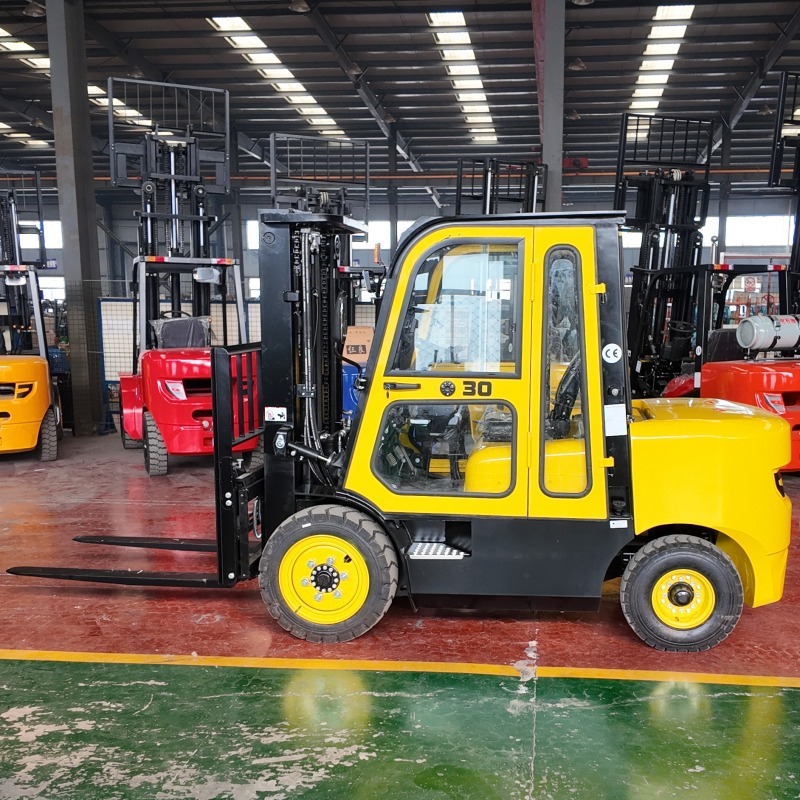
1. Tai’an Hongli Machinery Co., Ltd. (Hongli)
Category:
Best for Cost-Optimized OEM & Flexible Configuration
Key Specs:
- Capacity: 3.0 tons (6,600 lbs)
- Power: Lithium-ion / Lead-acid
- Battery: LiFePO₄ / 48V–80V options
- Mast Height: 3–6 m (9.8–19.7 ft)
- Controller: OEM / Curtis-compatible
- Turning Radius: ~2.3–2.6 m
- Price:$8,000–$16,000
- Warranty: 12–24 months
Overview:
Hongli focuses on cost-driven OEM electric forklifts for global distributors and warehouse operators. The 3 ton model is built on a standard industrial platform with configurable battery systems and mast options for different logistics environments.
Key Features:
- Lithium / lead-acid dual option
- Standard industrial chassis design
- Configurable mast and attachments
- OEM customization flexibility
- Export-oriented specification setup
Why It Matters:
Hongli competes in the mid-to-lower global price segment, targeting buyers prioritizing procurement flexibility and lower upfront cost rather than premium branding or global dealer networks.
2. HELI
Category:
Best for Large-Scale Global Distribution & General Warehouse Use
Key Specs:
- Capacity: 3.0 tons (6,600 lbs)
- Power: Lead-acid / Lithium-ion
- Battery: 48V–80V systems
- Mast Height: 3–6 m (9.8–19.7 ft)
- Controller: Curtis / Inmotion
- Price:$9,000–$18,000
- Warranty: 12–24 months
Overview:
HELI is China’s largest forklift manufacturer by volume, offering standardized 3 ton electric forklifts widely used in global warehouse and logistics operations. The design emphasizes production scale, parts availability, and stable platform engineering.
Key Features:
- High-volume standardized production platform
- Strong global spare parts availability
- Mature dealer and service network
- Compatible with widely used industrial controllers
- Multiple configuration options
Why It Matters:
HELI is positioned as a mainstream global OEM benchmark, competing on reliability, scale, and service coverage rather than customization or lowest cost.
3. Hangcha
Category:
Best for Export-Oriented Logistics & Lithium Adoption
Key Specs:
- Capacity: 3.0 tons (6,600 lbs)
- Power: Lithium-ion / Lead-acid
- Battery: 48V–80V Li-ion options
- Mast Height: 3–7 m (9.8–23 ft)
- Controller: ZAPI / Curtis
- Price:$10,000–$20,000
- Warranty: 12–24 months
Overview:
Hangcha is one of China’s largest forklift exporters, with strong penetration in Europe and North America. Its 3 ton electric forklift line is heavily oriented toward lithium-ion integration and modern warehouse applications.
Key Features:
- Strong lithium battery adoption strategy
- Wide export certification coverage (EU/US compliant models)
- High-efficiency warehouse-oriented design
- Flexible mast height configurations
- Established global distributor network
Why It Matters:
Hangcha is positioned as a high-volume export competitor, balancing cost, lithium technology adoption, and international compliance requirements, particularly for developed logistics markets.
4. EP Equipment
Category:
Best for Lithium-First Smart Warehouse Operations
Key Specs:
- Capacity: 3.0 tons (6,600 lbs)
- Power: Lithium-ion (core focus)
- Battery: LiFePO₄ high-cycle systems
- Mast Height: 3–6 m (9.8–19.7 ft)
- Controller: Inmotion / integrated systems
- Price:$12,000–$22,000
- Warranty: 12–24 months
Overview:
EP Equipment is a lithium-focused forklift manufacturer targeting modern warehouse and logistics systems. Its 3 ton electric forklifts are designed around high-frequency operation, fast charging capability, and reduced maintenance cycles.
Key Features:
- Lithium-first product architecture
- Fast charging / opportunity charging support
- Low maintenance design (no battery watering system)
- Optimized for multi-shift warehouse operations
- Strong presence in European logistics market
Why It Matters:
EP Equipment represents the transition toward fully electrified warehouse fleets, competing mainly in lithium-intensive applications where uptime and energy efficiency are prioritized over initial purchase cost.
5. BYD Forklift
Category:
Best for High-End Lithium Iron Phosphate (LiFePO₄) Industrial Applications
Key Specs:
- Capacity: 3.0 tons (6,600 lbs)
- Power: Lithium iron phosphate (LiFePO₄)
- Battery: Integrated BYD battery system
- Mast Height: 3–6 m (9.8–19.7 ft)
- Controller: Integrated BYD electric drive system
- Price:$18,000–$30,000
- Warranty: 24–36 months (varies by region)
Overview:
BYD Forklift is positioned in the premium lithium segment, leveraging its in-house battery manufacturing capability. The 3 ton electric forklift line is designed for high-utilization industrial environments where energy stability, long cycle life, and low degradation rate are critical.
Key Features:
- Fully integrated lithium battery + drivetrain system
- High cycle life (industrial LiFePO₄ chemistry)
- Strong thermal stability and safety profile
- Suitable for continuous multi-shift operations
- Reduced long-term energy degradation cost
Why It Matters:
BYD represents the high-end lithium benchmark in the Chinese forklift market, competing in applications where total lifecycle cost and battery reliability outweigh initial procurement price considerations.
6. Noblelift
Category:
Best for Warehouse Logistics & Mid-to-High Utilization Operations
Key Specs:
- Capacity: 3.0 tons (6,600 lbs)
- Power: Lithium-ion / Lead-acid
- Battery: 48V–80V systems
- Mast Height: 3–5 m (9.8–16.4 ft)
- Controller: Curtis
- Price:$9,500–$18,500
- Warranty: 12–24 months
Overview:
Noblelift focuses on warehouse logistics equipment, with a strong emphasis on electric material handling systems. Its 3 ton electric forklift range is designed for indoor logistics environments, including retail distribution centers, third-party logistics (3PL), and light manufacturing facilities.
Key Features:
- Strong warehouse-focused product architecture
- Stable Curtis controller integration
- Optimized for indoor logistics efficiency
- Broad global export experience
- Balanced lithium and lead-acid offerings
Why It Matters:
Noblelift is positioned as a logistics-specialized OEM, bridging the gap between high-volume general manufacturers and lithium-focused premium brands, with strong applicability in structured warehouse operations.
7. Lonking
Category:
Best for Budget-Oriented Industrial & Developing Markets
Key Specs:
- Capacity: 3.0 tons (6,600 lbs)
- Power: Lead-acid / Lithium (limited configurations)
- Battery: 48V–80V systems
- Mast Height: 3–4.5 m (9.8–14.8 ft)
- Controller: Standard OEM systems
- Price:$8,000–$15,000
- Warranty: 12–24 months
Overview:
Lonking is a diversified Chinese construction machinery manufacturer with a forklift product line positioned primarily in cost-sensitive markets. Its 3 ton electric forklifts are typically configured for basic warehouse and light industrial applications where simplicity and low acquisition cost are the primary decision drivers.
Key Features:
- Cost-focused product positioning
- Simplified maintenance structure
- Standard industrial forklift platform
- Suitable for emerging logistics markets
- Basic but functional electrical architecture
Why It Matters:
Lonking operates in the budget-oriented segment of the market, competing primarily on entry price and basic functionality rather than advanced lithium systems or high-end warehouse optimization.
Chinese vs Global Forklift Brands (3 Ton Electric Segment)
In the global 3 ton electric forklift market, competition is primarily defined by two ecosystems: established international OEMs (Japan, Europe, and the US) and rapidly expanding Chinese manufacturers. The key differences are less about basic functionality and more about cost structure, technology adoption speed, and service network maturity.
Core Comparison
|
Factor |
Chinese Brands |
Global OEMs (Toyota / KION / Hyster-Yale) |
|
Initial Cost |
Lower |
Higher |
|
Lithium Adoption |
Fast-growing, flexible |
Mature but slower rollout in some segments |
|
Customization |
High (OEM-oriented) |
Limited (standardized platforms) |
|
Dealer Network |
Developing |
Global & established |
|
Spare Parts Availability |
Region-dependent |
Strong global consistency |
|
Lead Time |
Shorter |
Longer |
Market Positioning Logic
Chinese manufacturers such as HELI, Hangcha, EP Equipment, Noblelift, BYD, and Hongli primarily compete on cost efficiency and configuration flexibility, making them suitable for distributors, rental fleets, and price-sensitive procurement programs.
Global OEMs such as Toyota Industries, KION Group, and Hyster-Yale generally dominate the premium reliability segment, where long-term brand assurance, standardized servicing, and resale value are key priorities.
Practical Buyer Insight
For most warehouse and logistics operators, the decision is no longer binary. Many fleets now adopt a mixed sourcing strategy, where:
- Chinese forklifts are used for scalable fleet expansion
- Global OEM units are used for critical or high-utilization positions
This hybrid procurement model has become increasingly common in 3 ton electric forklift deployments globally.
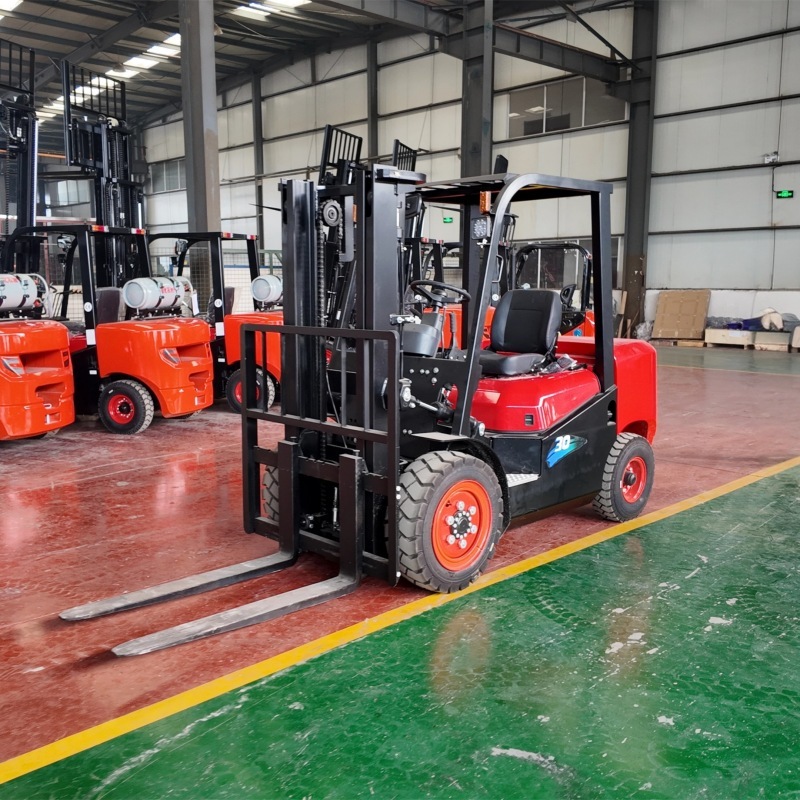
3 Ton Electric Forklift Selection Standards (2026 Procurement Benchmark)
To standardize purchasing decisions, 3 ton electric forklifts should be evaluated using measurable technical and operational thresholds rather than subjective brand preference. The following benchmarks reflect common international warehouse and industrial procurement standards.
1. Load & Stability Standard
- Rated capacity: ≥ 3.0 tons at 500 mm load center
- Safety margin: ≥ 10–15% above average working load
- Residual capacity (high lift): Must remain stable at 80%+ at max lift height
Minimum acceptance rule:
The forklift must maintain structural stability under full load at standard lifting height without performance degradation.
2. Battery Performance Standard
- Lithium cycle life: ≥ 2,000 cycles (industrial grade)
- Lead-acid cycle life: ≥ 1,200 cycles
- Fast charging capability: ≤ 2 hours (lithium systems preferred)
- Single shift endurance: ≥ 6–8 hours continuous operation
Minimum acceptance rule:
Battery system must support at least one full operational shift without performance drop below 80%.
3. Energy Efficiency Standard
- Energy consumption benchmark: 7–12 kWh per operating hour (load dependent)
- Efficiency loss tolerance: ≤ 15% under peak load conditions
Minimum acceptance rule:
Energy consumption must remain stable under variable load cycles without abnormal spikes.
4. Mast & Lifting System Standard
- Lift height range: 3,000–6,000 mm
- Mast type: Duplex or triplex depending on warehouse height
- Lifting speed stability: No significant slowdown under full load
Minimum acceptance rule:
Mast must maintain smooth lifting/lowering under rated load without hydraulic delay or vibration.
5. Control System Standard
- Controller brands: Curtis / ZAPI / Inmotion or equivalent industrial-grade systems
- Fault response time: Real-time diagnostic capability
- Thermal protection: Mandatory under continuous operation
Minimum acceptance rule:
Control system must support industrial-grade fault detection and stable multi-shift operation.
6. Structural & Safety Standard
- Frame durability: Industrial steel chassis rated for continuous duty cycles
- Braking system: Hydraulic + regenerative braking preferred
- Certification: CE (EU), ISO 3691 compliance recommended
Minimum acceptance rule:
Forklift must meet international industrial safety standards for export-grade equipment.
7. Total Cost of Ownership (TCO) Standard
- Target service life: 5–8 years
- Maintenance interval: ≥ 500 operating hours per service cycle
- Downtime tolerance: ≤ 3–5% annual operational loss
Minimum acceptance rule:
Lifecycle cost must be optimized, not just acquisition cost.
Conclusion
The 3 Ton Electric Forklift has become a global benchmark in warehouse and logistics operations, driven by its balanced combination of load capacity, energy efficiency, and operational flexibility. In 2026, procurement decisions are increasingly shifting toward lifecycle-based evaluation, where battery technology, utilization intensity, and total cost of ownership matter more than initial purchase price.
Within this landscape, Chinese manufacturers form a complete category ecosystem rather than a single competitive group:
- HELI / Hangcha → High-volume global OEM leaders with standardized platforms and strong dealer networks
- EP Equipment / BYD → Lithium-first and high-efficiency solutions for advanced warehouse operations
- Noblelift → Warehouse logistics-focused systems optimized for indoor material handling
- Tai’an Hongli Machinery Co., Ltd. (Hongli) → Cost-optimized OEM category focused on flexible configuration and procurement efficiency
- Email:hongli@hongli-mach.com
- Email:hongli@hongli-mach.com
This category structure reflects how the 3 ton electric forklift market is no longer defined by individual brands alone, but by differentiated solution layers across performance, cost, and application intensity.
Ultimately, selecting the right forklift requires aligning technical configuration—battery system, mast design, and control architecture—with real operational requirements, ensuring the balance between productivity and long-term operating cost efficiency