Reviewed for technical accuracy against U.S. EPA 40 CFR Part 1039 and Tier 4 Final emission standards.
If you’re sourcing an excavator for work in the United States — or importing one from China — EPA compliance isn’t optional. It determines whether your machine can legally operate on U.S. job sites, enter the country without customs delays, and qualify for government-funded projects.
This guide explains exactly what EPA compliance means for excavators, how the Tier system works, what to look for when buying, and how Chinese-manufactured machines can meet U.S. market requirements.
What Does “EPA Compliant” Mean for an Excavator?
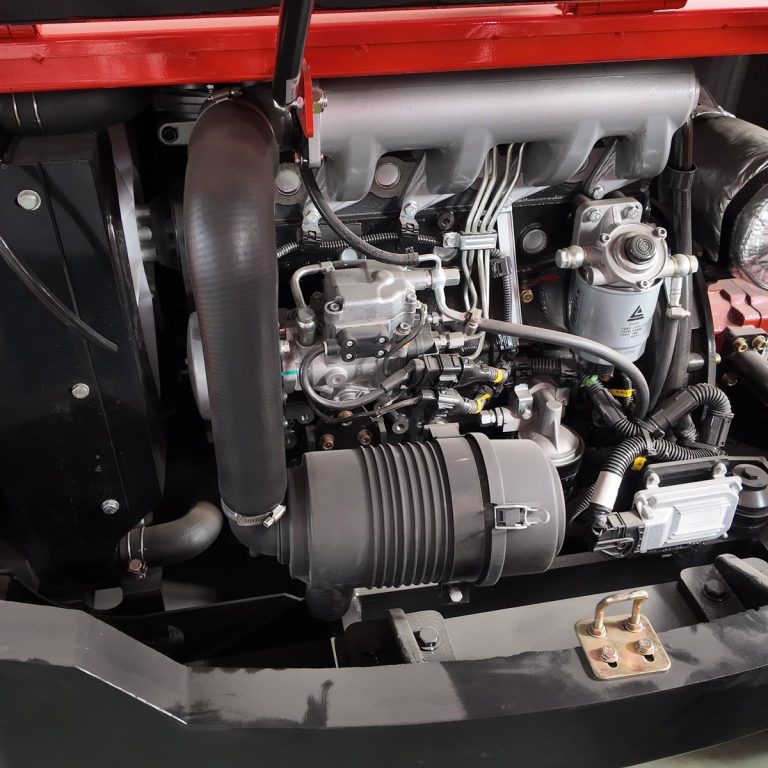
An EPA-compliant excavator is one whose diesel engine meets the emissions standards set by the U.S. Environmental Protection Agency (EPA) under the Clean Air Act, specifically the Non-Road Diesel Engine Regulations (40 CFR Part 1039).
These standards regulate three primary pollutants from diesel engines:
|
Pollutant |
Why It Matters |
|
NOx(Nitrogen Oxides) |
Causes smog and respiratory disease |
|
PM(Particulate Matter) |
Fine soot particles; lung damage risk |
|
HC(Hydrocarbons) |
Ground-level ozone precursor |
Every excavator sold or imported into the United States must carry an EPA Certificate of Conformity — a document issued by the EPA confirming the engine meets the applicable Tier standard for its power rating.
The EPA Tier System Explained (Tier 1 → Tier 4 Final)
The EPA has progressively tightened emission limits through four “Tier” levels since 1996. The current and most stringent standard is Tier 4 Final, which has been fully in effect since 2015 for most engine power ranges used in excavators.
Emission Limits by Tier (Engines 56–130 kW, typical mini-excavator range)
|
Tier |
Year Phased In |
NOx + HC (g/kWh) |
PM (g/kWh) |
|
Tier 1 |
1996–2000 |
9.2 |
0.54 |
|
Tier 2 |
2001–2003 |
7.5 |
0.20 |
|
Tier 3 |
2006–2008 |
4.7 |
0.30 |
|
Tier 4 Final |
2014–2015 |
4.7 (NOx), 0.19 (HC) |
0.025 |
Key takeaway: Compared to Tier 1, a Tier 4 Final engine produces approximately 93% less NOx and 94% less PM — a transformational reduction that required fundamental engine redesign.
⚠️ Important: Tier 3 engines can no longer be newly manufactured for U.S. sale. If a supplier offers you a “new” excavator with a Tier 3 engine for the U.S. market, this is a compliance red flag.
What Technology Makes an Engine Tier 4 Final Compliant?
Meeting Tier 4 Final limits requires hardware that did not exist in earlier tiers. Here’s what’s inside a compliant engine:
1. Diesel Particulate Filter (DPF)
Traps soot particles from exhaust. Requires periodic regeneration (burning off accumulated soot), either passively during normal operation or actively triggered by the engine control unit.
2. Selective Catalytic Reduction (SCR)
Injects Diesel Exhaust Fluid (DEF/AdBlue) into the exhaust stream to convert NOx into harmless nitrogen and water. Machines with SCR require a DEF tank — typically holding 5–15 liters depending on engine size — that needs regular refilling.
3. Exhaust Gas Recirculation (EGR)
Recirculates a portion of exhaust gas back into the intake to lower combustion temperatures and reduce NOx formation at the source.
4. Ultra-Low Sulfur Diesel (ULSD) Requirement
All Tier 4 Final engines require ULSD fuel (maximum 15 ppm sulfur). Standard diesel sold at U.S. fuel stations meets this requirement. However, if you import a machine and plan to use it in regions without ULSD infrastructure, this is a critical consideration.
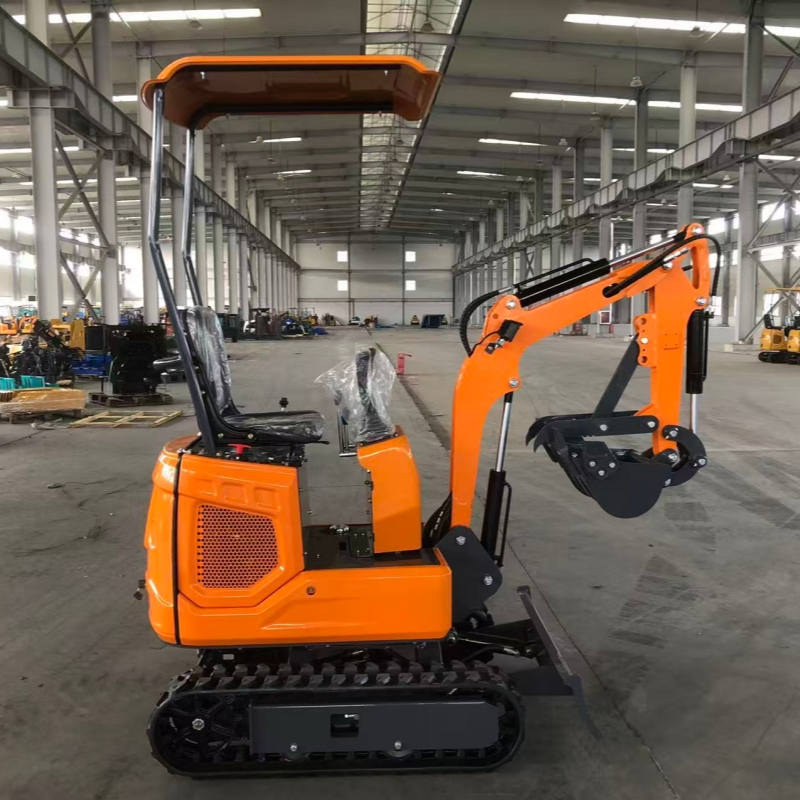
Engine Brands That Are EPA Tier 4 Final Certified
When evaluating an excavator — especially one manufactured in China for the U.S. market — verify the engine brand and check its EPA certificate. The following engines are widely used in compliant excavators:
|
Engine Brand |
Country |
Common Application |
|
Kubota(D722, D902, V2607) |
Japan |
Mini excavators 1–6 ton |
|
Yanmar(4TNV series) |
Japan |
Mini excavators 1–5 ton |
|
Deutz(TCD series) |
Germany |
Mid-range 5–20 ton |
|
Perkins(400/800 series) |
UK |
5–30 ton |
|
Cummins(QSF/QSB series) |
USA |
8–50+ ton |
|
Caterpillar(C3.3B–C15) |
USA |
Full range |
For Chinese-manufactured excavators exported to the U.S.: The machine body may be made in China, but a genuine Tier 4 Final certified engine (e.g., Kubota or Yanmar) must be installed. The EPA certificate belongs to the engine manufacturer, not the machine OEM. Always request the engine’s EPA Certificate of Conformity number and verify it at EPA’s Engine Certification database.
California Special Rules: CARB vs. EPA
If you plan to operate in California, be aware that the California Air Resources Board (CARB) enforces standards that are stricter than federal EPA requirements for off-road diesel equipment.
California’s In-Use Off-Road Diesel Vehicle Regulation (Title 13 CCR §2449) requires:
- All off-road diesel fleets to meet a fleet average PM standard
- A compliance schedule that phases out older Tier 0–2 engines
- Operators to report equipment and track compliance
Practical implication: A machine that is EPA Tier 4 Final compliant is generally also CARB compliant for new equipment sales. However, older Tier 2 or Tier 3 machines — even if purchased legally — may face operational restrictions in California.
How to Verify EPA Compliance Before Buying
Whether buying new from a Chinese manufacturer or purchasing used in the U.S., follow this verification checklist:
New Machine Checklist
- Request the EPA Certificate of Conformity for the engine (not the machine)
- Confirm the engine Family Name on the engine label matches the certificate
- Verify the Tier level matches the power output (kW) of the engine
- Confirm DEF tank and DPF are physically present (if Tier 4 Final)
- Check for engine emissions label affixed to the engine block
Used Machine Checklist
- Locate the engine emissions label (required by law to be affixed permanently)
- Note the Engine Family Name and look it up in EPA certification database
- Inspect DPF condition — replacement costs $2,000–$8,000
- Check DEF system integrity and pump function
- Request maintenance records showing DPF regeneration history
EPA Compliance for Imported Excavators: What Importers Must Know
If you are importing an excavator from China or any other country, the U.S. Customs and Border Protection (CBP) requires EPA documentation at the port of entry.
Required documents:
- EPA Declaration Form (EPA 3520-21) for engines
- Engine Certificate of Conformity number
- Statement of conformance from the engine manufacturer
Common import compliance mistakes:
- Using a “CE-certified” engine label as a substitute for EPA certification (CE and EPA are completely different standards — CE is the European conformity marking)
- Assuming a Tier 3 engine can be imported because the machine is “new”
- Missing the engine emissions label on the engine block (required under 40 CFR 1039.135)
Note on EPA vs. CE: These are separate, parallel regulatory frameworks. CE marking confirms conformity with EU safety and environmental directives for the European market. EPA Tier 4 Final is the U.S. emissions standard. A machine can hold both certifications, one, or neither — they do not substitute for each other.
Cost Implications of EPA Compliance
Tier 4 Final technology adds real cost — but also real value:
Higher upfront cost: Tier 4 Final engines typically add $3,000–$12,000 to the machine cost compared to equivalent non-compliant engines, depending on power rating and aftertreatment complexity.
Lower operating costs: Advanced fuel injection and combustion management improve fuel efficiency by 10–20% versus Tier 2/3 equivalents in comparable duty cycles. Reduced maintenance intervals on modern Tier 4 Final engines partially offset aftertreatment maintenance costs.
Higher resale value: EPA-compliant machines hold significantly higher resale value in the U.S. market. Non-compliant machines cannot be legally resold for on-site use.
Ongoing DEF cost: DEF consumption is approximately 2–5% of diesel consumption. At current prices (~$0.30–0.50/liter), this adds a modest but real ongoing cost.
Hongli’s EPA-Compliant Excavator Lineup for the U.S. Market
At Taian Hongli Machinery, we understand that the U.S. market has specific compliance requirements that differ from other regions. That’s why we offer a dedicated U.S.-spec configuration across our excavator lineup — with genuine Kubota engines fitted as standard for American buyers.
Why the U.S. Market Needs a Different Configuration
Our excavators are sold globally and come with multiple engine options depending on the destination market. For buyers in regions without strict emissions requirements, we offer cost-effective domestic engine options. For the U.S. market, we configure machines with EPA Tier 4 Final certified Kubota engines — giving you a machine that’s fully legal, documentable, and importable without customs complications.
Recommended Models for U.S. Buyers
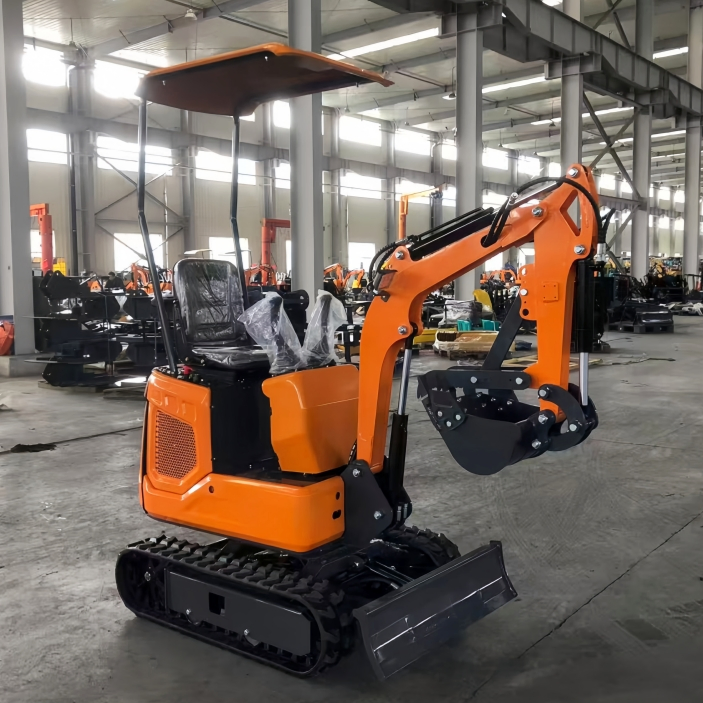
Based on current U.S. market demand, mini excavators in the 1.8–2 ton class are the sweet spot for small contractors, landscapers, and farm owners — powerful enough for real work, compact enough to trailer easily and operate in confined spaces.
We recommend two models for U.S. buyers:
|
|
HL18 |
HL20 |
|
Operating Weight |
1.8 ton |
2 ton |
|
Engine (U.S. Spec) |
Kubota D722 (Tier 4 Final) |
Kubota D902 (Tier 4 Final) |
|
Displacement |
719cc / 16.4 HP |
898cc / 20.4 HP |
|
Bucket Capacity |
0.05 m³ |
0.06 m³ |
|
Best For |
Tight spaces, landscaping, light trenching |
General farm work, utility digging, site prep |
Which one should you choose? The HL18 is the better pick if you’re working in confined areas or need to keep transport weight down. The HL20 gives you slightly more digging capacity and suits buyers who need a true all-rounder for mixed farm and construction tasks.
About these engines: The Kubota D722 and D902 are both 3-cylinder liquid-cooled diesel engines from Kubota’s Super Mini Series, both holding EPA Tier 4 Final and EU Stage V certification. The D722 is lighter and more fuel-efficient — ideal for the HL18’s compact frame. The D902 delivers more torque and digging force, making it the right match for the HL20’s heavier workload. Both have extensive parts and service networks across the United States.
Common Compliance Issues We See Among U.S. Buyers
Based on inquiries received from U.S. buyers over the years, we’ve identified a consistent pattern of mistakes that lead to fines, customs delays, or machines that can’t legally operate on American job sites. These aren’t edge cases — they come up regularly.
Mistake #1: Buying a machine without requesting the engine’s EPA Certificate of Conformity
This is the most frequent issue. A buyer purchases a mini excavator from a Chinese supplier, the invoice says “EPA compliant,” but no actual certificate is provided. At the port of entry — or worse, during a job site inspection — there is no documentation to prove compliance. The machine gets flagged or the operator gets fined.
What to do instead: Always request the EPA Certificate of Conformity for the engine specifically, not the machine. The certificate is issued by the engine manufacturer (e.g., Kubota) and contains a unique Engine Family Name you can verify directly in the EPA database.
Mistake #2: Confusing CE certification with EPA compliance
We regularly hear from buyers who were told by suppliers that “CE certified = good for USA.” This is incorrect. CE is the European conformity marking — it has no legal standing in the United States. A machine can be CE certified and still be entirely non-compliant with EPA Tier 4 Final standards.
What to do instead: Treat CE and EPA as completely separate requirements. For the U.S. market, only EPA documentation matters at customs.
Mistake #3: Operating non-compliant equipment in strict-enforcement states
One pattern we see frequently involves buyers in states like California, where CARB enforcement goes beyond federal EPA minimums. Several buyers have contacted us after purchasing non-compliant machines — often at attractive price points — only to face fines for operating them, find they cannot use them on contract jobs, and discover the resale value is near zero in-state.
A small farm owner in California contacted us after exactly this situation. He had purchased a mini excavator from another supplier, was fined for running it on his property, and needed a compliant replacement that wouldn’t repeat the problem. He ordered our HL20 configured with a Kubota D902 engine. The machine shipped with full EPA documentation and cleared U.S. customs without issue.
What to do instead: Factor compliance into the total cost of ownership from day one. A machine that’s $2,000 cheaper but generates fines and operational restrictions is not a bargain.
Mistake #4: Assuming a “new” machine with a Tier 3 engine is importable
Tier 3 engines cannot be newly manufactured or imported into the U.S. for sale. Some suppliers — particularly those unfamiliar with U.S. regulations — still offer Tier 3-powered machines as “new.” These cannot clear EPA customs requirements regardless of how new the machine body is.
What to do instead: Confirm the Tier level before ordering. Any new excavator for U.S. use must have a Tier 4 Final certified engine. Ask for the engine model number and verify it yourself.
Can’t Find the Exact Spec You Need?
Beyond our own production line, Hongli works with an established network of partner manufacturers across China. If you need a specific tonnage, configuration, or attachment setup that isn’t in our standard range, we can source and verify EPA-compliant machines through our procurement network — saving you the complexity of identifying and vetting suppliers yourself.
What Every U.S.-Spec Hongli Excavator Includes
✅ Kubota EPA Tier 4 Final certified engine (D722 or D902 depending on model)
✅ Engine EPA Certificate of Conformity documentation
✅ Engine emissions compliance label affixed to block
✅ ULSD fuel compatibility confirmed
✅ Door-to-door shipping available to U.S. ports
→ View our mini excavator range
→ WhatsApp us for a U.S.-spec quote
→ Email: hongli@hongli-mach.com
Frequently Asked Questions
Q: Can I use a non-EPA compliant excavator on private land in the U.S.?
A: Federal EPA regulations apply to engines sold or imported into the U.S. — not just those used on public projects. Operating a non-compliant engine that was never certified for U.S. sale is a violation of the Clean Air Act regardless of where it’s used.
Q: Is a Chinese excavator with a Tier 3 engine legal in the U.S.?
A: Tier 3 engines cannot be newly manufactured or imported for U.S. sale. Machines with Tier 3 engines already in the U.S. (purchased before the phase-out) may continue operating, but cannot be resold as new.
Q: What’s the difference between EPA Tier 4 Final and EU Stage V?
A: Both are the current highest-tier standards in their respective regions, with broadly similar emission targets. Stage V adds tighter particle number (PN) limits not present in Tier 4 Final. Neither certification substitutes for the other.
Q: How do I find the Tier level of an excavator engine?
A: Look for the engine emissions label on the engine block — it’s legally required. It shows the engine family name, Tier level, and pollutant limits. You can cross-reference with EPA’s certification database.
Summary
An EPA-compliant excavator is not simply a marketing label — it’s a legally defined standard tied to specific engine technology (DPF, SCR, EGR), certified by the EPA under Clean Air Act authority, and required for any excavator operated or sold in the United States. Tier 4 Final is the current benchmark, and any machine offered as “new” for the U.S. market that doesn’t meet it should raise immediate concerns.
For buyers sourcing from China, the key is verifying the engine — not just the machine brand. A reputable Chinese manufacturer will provide full EPA engine documentation without hesitation.
Sources:
- U.S. EPA 40 CFR Part 1039 — Non-Road Diesel Engine Regulations
- EPA Engine Certification Database
- California ARB — In-Use Off-Road Diesel Vehicle Regulation (Title 13 CCR §2449)
- Caterpillar — Understanding Global Emissions Standards