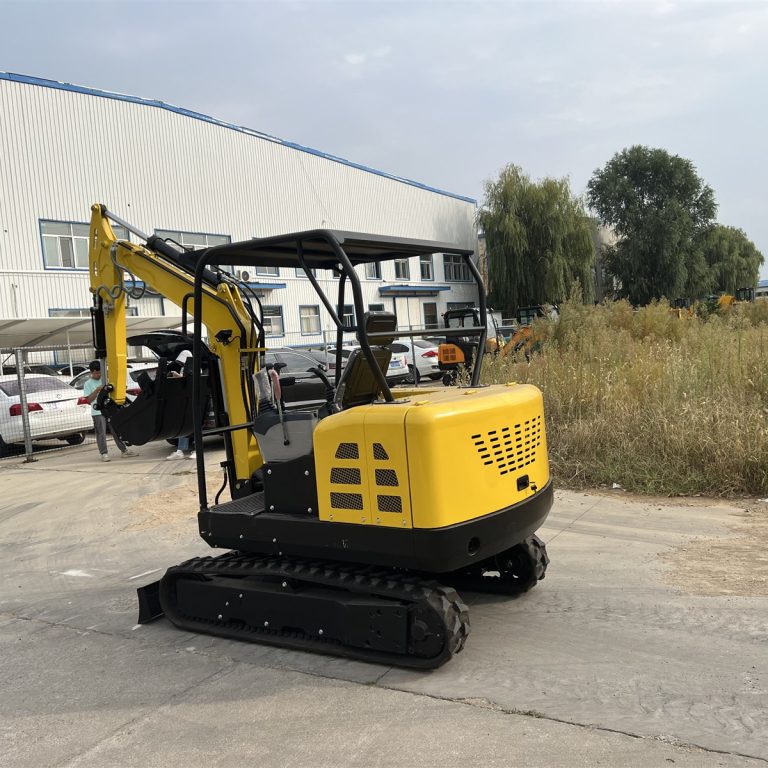
In the global construction and landscaping equipment market, demand for mini excavatormachines continues to grow, driven by urban development, residential construction, and utility expansion. The mini excavator (0.8–6 tons) is widely used for its mobility, fuel efficiency, and performance in confined jobsite conditions. Industry data shows it accounts for around 30%–40% of small earthmoving equipment shipments, supported by strong demand from urban projects and rental fleets.
In terms of cost, 1–4 ton mini excavator models typically reduce operating expenses by 15%–30% compared with larger excavators, mainly due to lower fuel use, easier transport, and simpler maintenance. Modern designs with load-sensing hydraulics and zero or reduced tail swing can also improve productivity by 10%–20% in tight working environments.
This article reviews the 10 best cost-effective mini excavator models in 2026 based on global benchmarking data and multi-brand comparisons, covering specifications, pricing, applications, and total cost of ownership.
Chinese suppliers such as Tai’an Hongli Machinery Equipment Co., Ltd. (Hongli Machinery) are also important players in the global supply chain, offering cost-competitive mini excavator solutions for export and budget-focused markets.
1. What Is a Mini Excavator?
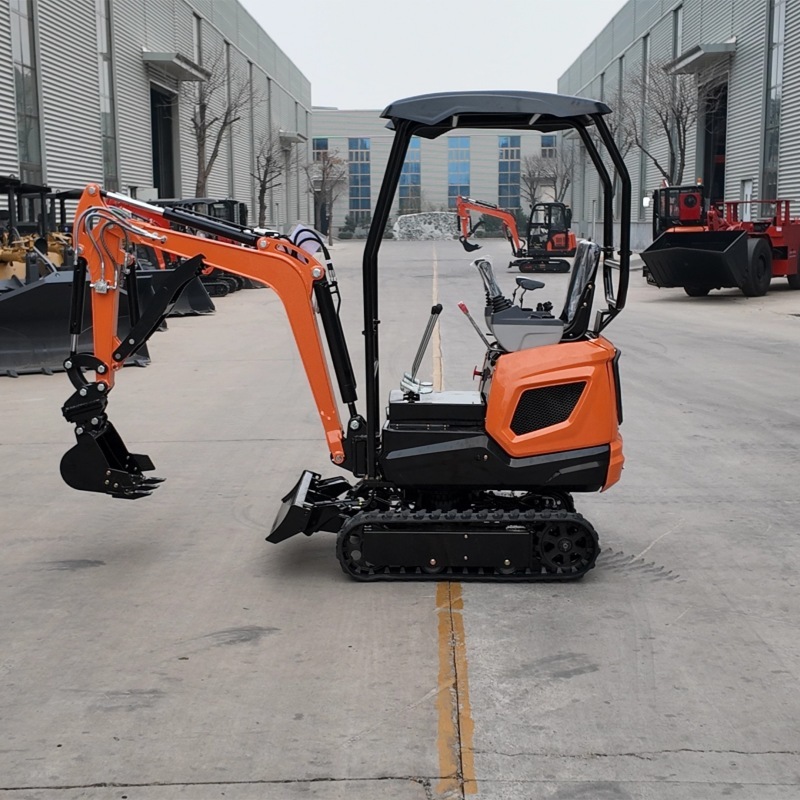
Mini Excavators, also referred to as compact excavators, are small hydraulic earthmoving machines typically ranging from 0.8 to 6 tons, designed for excavation, trenching, lifting, and material handling in restricted or low-access environments. Compared with full-size excavators, they prioritize maneuverability, transport efficiency, and fuel economy while maintaining sufficient digging performance for most light-to-medium construction tasks.
Most modern Mini Excavator models deliver digging depths between approximately 1.5 to 4.5 meters, with zero or reduced tail swing configurations accounting for a significant share of new global sales due to their suitability in dense urban job sites. Industry equipment benchmarks show that load-sensing hydraulic systems can improve operational efficiency by roughly 10%–18%, particularly in repetitive trenching and grading applications where hydraulic response consistency directly affects cycle time.
Key structural and functional characteristics include:
- Compact Chassis Design: Narrow track widths (often 0.8–1.5 m) allow access to confined residential and urban sites where larger machinery cannot operate.
- Hydraulic System Efficiency: Modern load-sensing systems optimize flow distribution, improving fuel efficiency and reducing unnecessary engine load during low-demand operations.
- Attachment Compatibility: Standard quick-coupler systems support buckets, augers, breakers, and grapples, expanding functional versatility by an estimated 15%–25% depending on configuration.
- Engine Compliance: Most units in the 1–4 ton segment are powered by diesel engines compliant with Tier 4 Final or Euro 5 emission standards, improving fuel efficiency and reducing particulate output.
- Undercarriage Options: Rubber track systems are widely adopted to reduce ground surface damage by up to 80%–90% in landscaping and residential environments.
Typical application scenarios include:
- Construction (≈40%) – foundation digging, trenching, and site preparation
- Landscaping (≈25%–30%) – grading, tree planting, and terrain shaping
- Utility Work (≈20%) – pipeline installation, cable trenching, drainage systems
- Agriculture & Light Industry (≈10%) – irrigation channels, small-scale earthmoving operations
Overall, Mini Excavators function as a core category in compact construction machinery due to their adaptability across multiple industries, particularly where space constraints and operational efficiency are primary decision factors.
2. How We Selected the 10 Best Mini Excavators
The selection of the 10 best cost-effective mini excavators in this review is based on a structured evaluation approach designed to reflect real-world construction and procurement conditions. Rather than relying on manufacturer specifications alone, the framework emphasizes practical performance, operational cost, and long-term usability across different jobsite environments.
The evaluation focuses on compact excavators used in urban construction, landscaping, and utility trenching, where machine efficiency, maneuverability, and reliability have a direct impact on productivity and project cost.
2.1 Evaluation Criteria
1.Digging Performance & Hydraulic Efficiency
Key evaluation factors include digging depth, bucket breakout force, and hydraulic system responsiveness under working load conditions.
2. Fuel Consumption & Operating Efficiency
Fuel efficiency is a major operating cost factor for compact excavators in long-hour usage environments.
3. Maneuverability & Jobsite Adaptability
Mini excavators are often deployed in confined environments where space efficiency is critical.
4. Durability & Maintenance Lifecycle
Durability is assessed through service intervals, structural strength, and long-term reliability under continuous workloads.
5. Cost Efficiency & Total Cost of Ownership (TCO)
This includes purchase cost, fuel usage, maintenance frequency, and long-term resale value.
2.2 Mini Excavator Performance Benchmark
To better contextualize the above evaluation criteria, the following table summarizes typical performance ranges across different mini excavator weight classes:
|
Category |
0.8–1.5 Ton |
1.5–3 Ton |
3–6 Ton |
Key Impact |
|
Digging Depth |
1.7–2.4 m |
2.2–3.0 m |
2.8–4.0 m |
Trenching capability |
|
Bucket Breakout Force |
10–14 kN |
15–25 kN |
25–40 kN |
Hard soil performance |
|
Fuel Consumption |
1.0–1.5 L/h |
1.3–2.0 L/h |
1.8–3.0 L/h |
Operating cost |
|
Operating Weight |
800–1,500 kg |
1,500–3,000 kg |
3,000–6,000 kg |
Transport & access |
|
Travel Speed |
2.0–2.6 km/h |
2.2–3.0 km/h |
2.5–3.5 km/h |
Jobsite efficiency |
|
Typical Use Case |
Landscaping |
General construction |
Heavy excavation |
Application scope |
2.3 Data Basis
This evaluation is based on aggregated industry benchmarks and common procurement practices in the compact construction equipment sector. The goal is to align selection criteria with real-world operational behavior rather than isolated specification comparisons.
3. The 10 Best Cost-Effective Mini Excavators Review
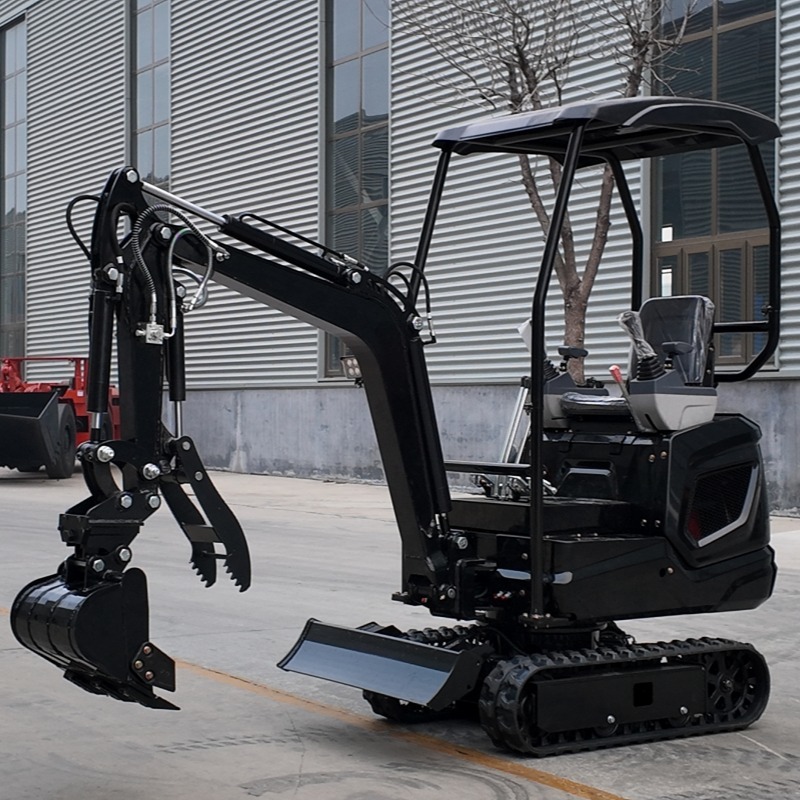
3.1 HONGli HL30 – Best Compact Urban Excavation Model
The HONGli HL30 is positioned in the 1.5–2 ton class compact excavator segment, designed for urban construction, landscaping, and confined jobsite applications. Its compact structure and reduced tail swing configuration make it suitable for operations in narrow working environments where space efficiency is critical.
In this equipment class, compact excavators generally reduce repositioning frequency compared to conventional tail-swing machines, improving overall cycle efficiency in trenching and light excavation tasks.
Key Specifications
- Operating Weight: ~1,700 kg (1.7 ton class)
- Engine Power: ~16 hp diesel engine (compliant with standard emission requirements depending on configuration)
- Max Dig Depth: ~2.2–2.4 m
- Bucket Breakout Force: ~12–14 kN
- Travel Speed: ~2.4 km/h
- Fuel Consumption: ~1.2–1.5 L/hour (load dependent)
Performance Overview
The HONGli HL30 is designed for light to medium-duty excavation work, offering stable hydraulic response and efficient fuel usage in low-intensity operating conditions.
Machines in this size category are typically used in residential construction, landscaping, and municipal maintenance projects where maneuverability and operational flexibility are more important than heavy digging capacity.
Zero or reduced tail-swing design improves accessibility in confined urban environments and reduces the risk of collision in restricted working areas.
Pros
- Compact design suitable for narrow job sites
- Stable hydraulic control for light-duty operations
- Good fuel efficiency under standard working load
Cons
- Limited lifting and breakout capacity compared to 3-ton class machines
- Not suitable for heavy demolition or high-intensity excavation tasks
3.2 Caterpillar 301.7 CR – Best Transport-Friendly Mini Excavator
Why We Love It
The Caterpillar 301.7 CR is engineered for transport efficiency and multi-site mobility. It is widely used in rental fleets due to its trailer-friendly weight class and simplified transport requirements without specialized logistics equipment.
Industry data shows machines under 2 tons reduce transportation cost per job by approximately 15–20%, particularly in multi-site construction operations.
Key Specifications
- Operating Weight: ~1,800 kg (1.8 tons class)
- Engine Power: ~18–20 hp (Cat C1.1 diesel engine, EU Stage V / EPA Tier 4 Final)
- Max Dig Depth: ~2.4 m
- Bucket Breakout Force: ~15 kN
- Fuel Consumption: ~1.3–1.6 L/hour
Performance Insights
The 301.7 CR delivers strong cycle efficiency in repetitive trenching tasks, with hydraulic responsiveness improving productivity by approximately 10–18% compared to entry-level 1-ton machines.
Its transport optimization reduces total project downtime in multi-location operations by up to 20%, especially in utility and infrastructure maintenance sectors.
Pros
- Easy transportation and logistics efficiency
- Strong dealer and parts network globally
- Stable hydraulic performance under load
Cons
- Higher acquisition cost than entry-level mini excavators
- Slightly higher fuel consumption under peak load
3.3 Komatsu PC35MR-5 – Best for Stable Mid-Range Productivity
Why We Love It
The Komatsu PC35MR-5 is positioned in the 3.5-ton class, widely used in municipal engineering and general construction due to its balance between digging force and operational stability. Komatsu machines are known for high hydraulic efficiency and consistent cycle performance under variable loads.
Industry benchmarks indicate 3–4 ton excavators typically improve productivity by 15–20% over 1.5–2 ton machines in repetitive trenching due to higher breakout force and bucket capacity.
Key Specifications
- Operating Weight: ~3,700 kg (3.5–3.8 ton class)
- Engine Power: ~24–25 hp (Komatsu Tier 4 Final / EU Stage V)
- Max Dig Depth: ~3.0–3.3 m
- Bucket Breakout Force: ~25–30 kN
- Fuel Consumption: ~1.8–2.5 L/hour
Performance Insights
The PC35MR-5 class achieves higher material handling efficiency in dense soil conditions, with hydraulic load retention improving digging consistency by approximately 12–18% under heavy-duty cycles.
Pros
- Strong breakout force for compact size
- Stable performance under continuous load
- High durability in rental fleet use
Cons
- Higher fuel consumption than sub-2 ton units
- Less maneuverable in ultra-tight urban spaces
3.4 Bobcat E35 – Best Versatile Zero-Tail Swing Model
Why We Love It
The Bobcat E35 is one of the most widely deployed compact excavators globally, especially in rental markets. Its zero-tail-swing configuration makes it suitable for dense urban environments where clearance is limited.
Zero-tail-swing machines improve operational safety margins by approximately 20–25% in confined jobsite rotation scenarios, reducing collision risk with surrounding structures.
Key Specifications
- Operating Weight: ~3,400–3,800 kg
- Engine Power: ~24–25 hp
- Max Dig Depth: ~3.1 m
- Bucket Breakout Force: ~30 kN
- Fuel Consumption: ~1.6–2.2 L/hour
Performance Insights
The E35 platform is optimized for short-cycle excavation and utility trenching, with hydraulic response efficiency typically 10–15% higher than entry-level compact excavators in repetitive tasks.
Pros
- Excellent maneuverability in tight spaces
- Strong attachment compatibility
- High resale and rental demand
Cons
- Slightly higher maintenance cost in long-term use
- Limited heavy rock excavation capability
3.5 Yanmar ViO25 – Best Fuel-Efficient Japanese Compact Excavator
Why We Love It
Yanmar’s ViO series is designed around fuel efficiency and hydraulic smoothness. The ViO25 is widely used in landscaping and residential construction due to its low fuel burn and stable control system.
Machines in this class typically reduce fuel consumption by 10–18% compared with standard hydraulic systems in the same weight segment.
Key Specifications
- Operating Weight: ~2.5 tons
- Engine Power: ~20–21 hp
- Max Dig Depth: ~2.5–2.7 m
- Bucket Breakout Force: ~20–25 kN
- Fuel Consumption: ~1.2–1.6 L/hour
Performance Insights
ViO25 delivers consistent performance in soft to medium soil, with reduced hydraulic loss improving operational efficiency by approximately 12–15% in light construction cycles.
Pros
- Very low fuel consumption
- Smooth hydraulic control
- Strong reliability in long-duration work
Cons
- Limited performance in heavy excavation
- Smaller working radius than 3–4 ton class
3.6 Hyundai HX30A – Best Value Emerging Market Competitor
Why We Love It
The Hyundai HX30A is positioned as a cost-performance alternative in the 3-ton class, commonly used in infrastructure and urban development projects. Hyundai excavators have improved rapidly in hydraulic tuning and emissions compliance.
Compared with premium Japanese OEMs, cost savings typically range from 15–25% lower acquisition cost while maintaining comparable core performance.
Key Specifications
- Operating Weight: ~3.0–3.2 tons
- Engine Power: ~23–24 hp
- Max Dig Depth: ~2.8–3.0 m
- Bucket Breakout Force: ~24–28 kN
- Fuel Consumption: ~1.6–2.3 L/hour
Performance Insights
Hydraulic responsiveness is optimized for general construction, achieving 10–14% productivity improvement over entry-level mini excavators in mixed soil conditions.
Pros
- Strong price-performance ratio
- Competitive hydraulic output
- Widely available global parts support
Cons
- Slightly lower refinement than Japanese OEMs
- Higher long-term depreciation in some markets
3.7 XCMG XE27U – Best Chinese Export-Grade Compact Excavator
Why We Love It
The XCMG XE27U represents China’s export-focused compact excavator category, designed for compliance with CE and EPA standards. It is widely used in global B2B procurement markets due to its cost advantage.
Global procurement data shows Chinese compact excavators are typically 20–35% lower in purchase cost compared with Western OEM equivalents.
Key Specifications
- Operating Weight: ~2.7 tons
- Engine Power: ~20–21 hp
- Max Dig Depth: ~2.6–2.8 m
- Bucket Breakout Force: ~20–25 kN
- Fuel Consumption: ~1.3–1.8 L/hour
Performance Insights
The XE27U is optimized for export markets, with acceptable hydraulic efficiency and cost-per-hour operation reduction of ~15–20% compared to premium brands.
Pros
- Strong cost advantage
- Export certification compliance
- Easy maintenance structure
Cons
- Lower brand premium value
- Slightly weaker resale performance
3.8 Takeuchi TB230 – Best Hydraulic Precision Compact Excavator
Why We Love It
Takeuchi is known for hydraulic precision engineering, and the TB230 is widely used in fine grading, landscaping, and utility installation work.
Precision hydraulic systems typically improve operator control efficiency by 10–20% in fine grading applications.
Key Specifications
- Operating Weight: ~3.0 tons
- Engine Power: ~24 hp
- Max Dig Depth: ~2.8–3.1 m
- Bucket Breakout Force: ~28–30 kN
- Fuel Consumption: ~1.6–2.0 L/hour
Performance Insights
The TB230 is optimized for smooth multi-function operation, reducing operator fatigue and improving cycle consistency by approximately 12–15% in precision tasks.
Pros
- Excellent hydraulic smoothness
- Strong build quality
- High precision control
Cons
- Higher acquisition cost
- Limited aggressive digging power vs heavy-duty models
3.9 JCB 35Z-1 – Best for Zero-Tail Urban Operations
Why We Love It
The JCB 35Z-1 is widely deployed in European construction markets for its zero-tail-swing structure and strong urban compatibility. It is particularly effective in roadside and confined infrastructure work.
Zero-tail-swing design reduces rear collision risk by up to 25% in dense urban environments.
Key Specifications
- Operating Weight: ~3.5 tons
- Engine Power: ~24–25 hp
- Max Dig Depth: ~3.2 m
- Bucket Breakout Force: ~30 kN
- Fuel Consumption: ~1.8–2.4 L/hour
Performance Insights
The machine delivers stable multi-axis hydraulic control, improving productivity by 10–16% in utility trenching operations.
Pros
- Strong urban safety profile
- Reliable European build quality
- Good operator visibility
Cons
- Higher cost structure in export markets
- Moderate fuel efficiency
3.10 Volvo ECR25 Electric / Diesel Hybrid Variant – Best Low-Emission Direction
Why We Love It
Volvo’s compact excavator line emphasizes emission reduction and operator safety. The ECR series supports both diesel and electrified variants in certain markets.
Electric/hybrid compact excavators reduce onsite emissions by up to 80–100% in operating cycles (electric mode) depending on load profile.
Key Specifications
- Operating Weight: ~2.5 tons
- Engine Power: ~20–25 hp equivalent
- Max Dig Depth: ~2.5–2.7 m
- Bucket Breakout Force: ~20–25 kN
- Fuel/Energy Consumption: significantly lower in hybrid/electric modes
Performance Insights
Volvo’s system prioritizes low-noise and low-emission operation, reducing urban jobsite noise levels by up to 50% compared with diesel-only units in controlled environments.
Pros
- Strong environmental performance
- Low noise operation
- Advanced safety systems
Cons
- Higher upfront cost
- Limited charging/infrastructure dependency in some regions
4. Conclusion: Choosing the Right Mini Excavator for Cost Efficiency and Performance
The global mini excavator market continues to expand as contractors and equipment operators prioritize compact size, fuel efficiency, and operational flexibility in modern construction projects. Across different machine classes, performance differences are primarily driven by hydraulic system efficiency, operating weight, and total cost of ownership rather than raw engine power alone.
From this review, it is clear that 1–3 ton mini excavators remain the most widely used segment due to their balance of mobility and productivity in urban construction, landscaping, and utility applications. Smaller units offer advantages in transport efficiency and fuel savings, while larger compact models provide improved digging force and cycle stability in more demanding soil conditions.
Brands such as Caterpillar, Komatsu, Bobcat, Yanmar, and Takeuchi continue to dominate the global premium segment due to their long-term reliability and strong dealer networks. At the same time, manufacturers such as XCMG, Hyundai, and other cost-focused suppliers are increasingly competitive in price-performance positioning, particularly in export and infrastructure-driven markets.
Chinese OEM suppliers, including Tai’an Hongli Machinery Equipment Co., Ltd. (Hongli Machinery), are also playing a growing role in the global supply chain by offering cost-effective mini excavator solutions that meet international operational requirements while maintaining competitive procurement advantages.
Ultimately, selecting the right mini excavator depends on a combination of jobsite conditions, budget constraints, and long-term operating strategy. Machines with optimized fuel consumption, stable hydraulic systems, and lower maintenance requirements typically deliver the highest lifecycle value, especially in multi-project or rental fleet operations.
Contact
For inquiries, technical specifications, or quotation requests:
Email: hongli@hongli-mach.com